For more than 25 years, I have worked on the ecology and conservation of birds in Cuba and the Caribbean, with much of my research focused on parrots. My work combines long-term field studies of populations and breeding ecology with habitat analysis and conservation work with local communities and protected-area staff. .
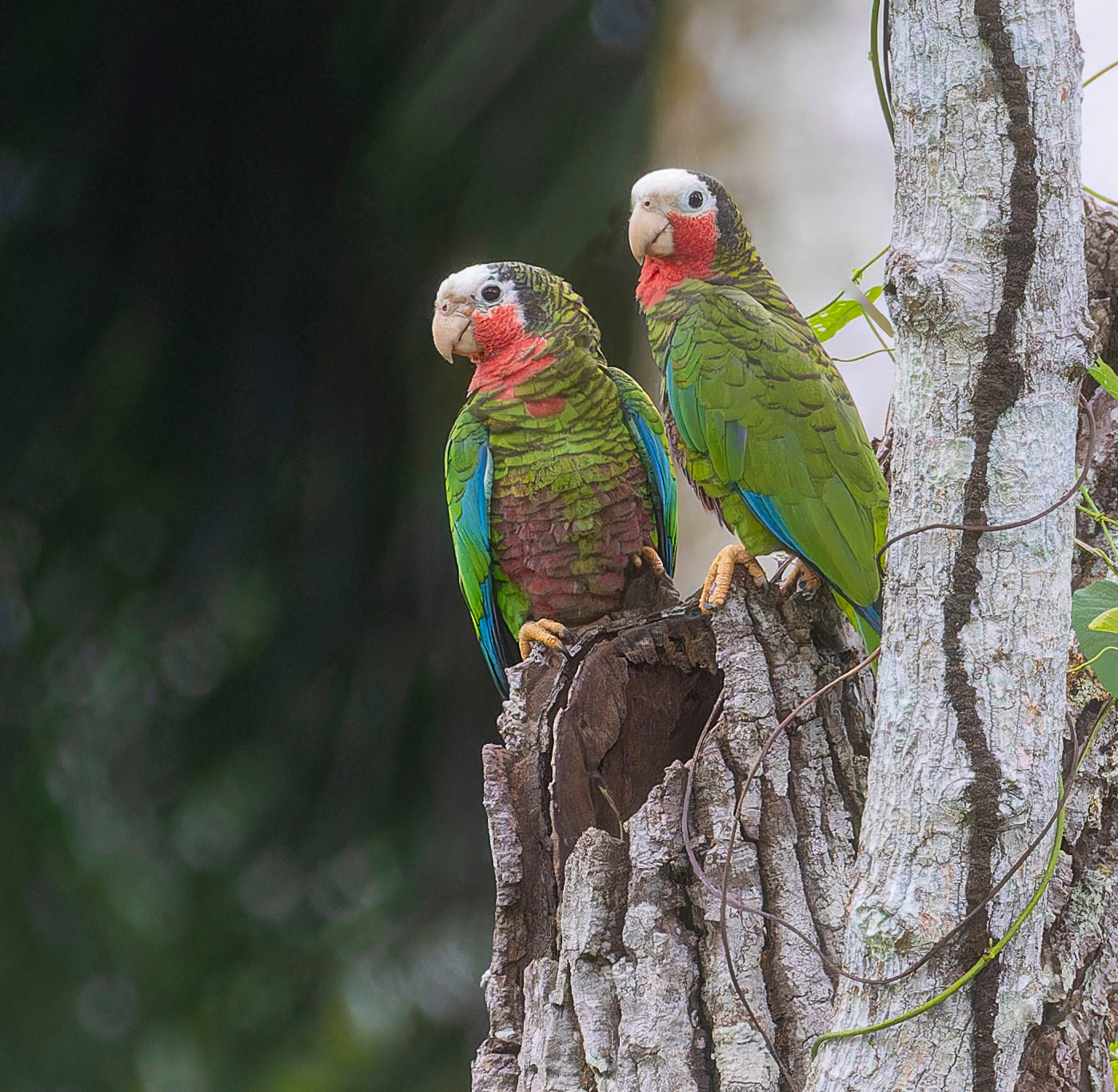
Long-term Conservation of Cuba’s Endemic Parrots
Cuban Amazon (Amazona leucocephala) and Cuban Parakeet (Psittacara euops) · Cuba · 1998–present
Project overview
Since 1998, this long-term program has investigated and supported the conservation of the Cuban Amazon and Cuban Parakeet across several Cuban landscapes. It began in Lomas de Banao Ecological Reserve, addressing the scarcity of suitable nesting cavities through artificial nest boxes and the management of natural nesting sites, and later expanded to Ciénaga de Zapata, Pico San Juan, Havana and other priority areas. Since 2005, the program has been supported by Loro Parque Fundación.
My role
My role includes the scientific design and coordination of field research, long-term population and nest monitoring, the evaluation and management of natural nesting sites, the development and monitoring of artificial nest boxes, spatial analyses, training of field teams, community engagement, and the translation of research findings into conservation priorities and management actions.
Institutional affiliations
Instituto Cubano de Biodiversidad
Havana, Cuba · Ornithologist and conservation scientist
Havana, Cuba · Ornithologist and conservation scientist
Research approach
The program combines long-term population monitoring with reproductive ecology, the management of natural nesting sites and artificial nest boxes, habitat and climate analyses, and community-based conservation. Field data are used to evaluate population trends, reproductive success, habitat change and emerging threats, while collaboration with local residents and protected-area staff strengthens nest monitoring, environmental education and local conservation capacity.
Selected outcomes
Long-term monitoring has produced a comprehensive dataset on population trends, breeding ecology and conservation threats affecting both species. Spatial analyses have helped identify priority conservation areas and potential climate refugia, particularly in the Zapata Peninsula and central Cuba. The program has also documented responses to human-modified and urban environments and strengthened local participation in population counts, nest monitoring and environmental education.
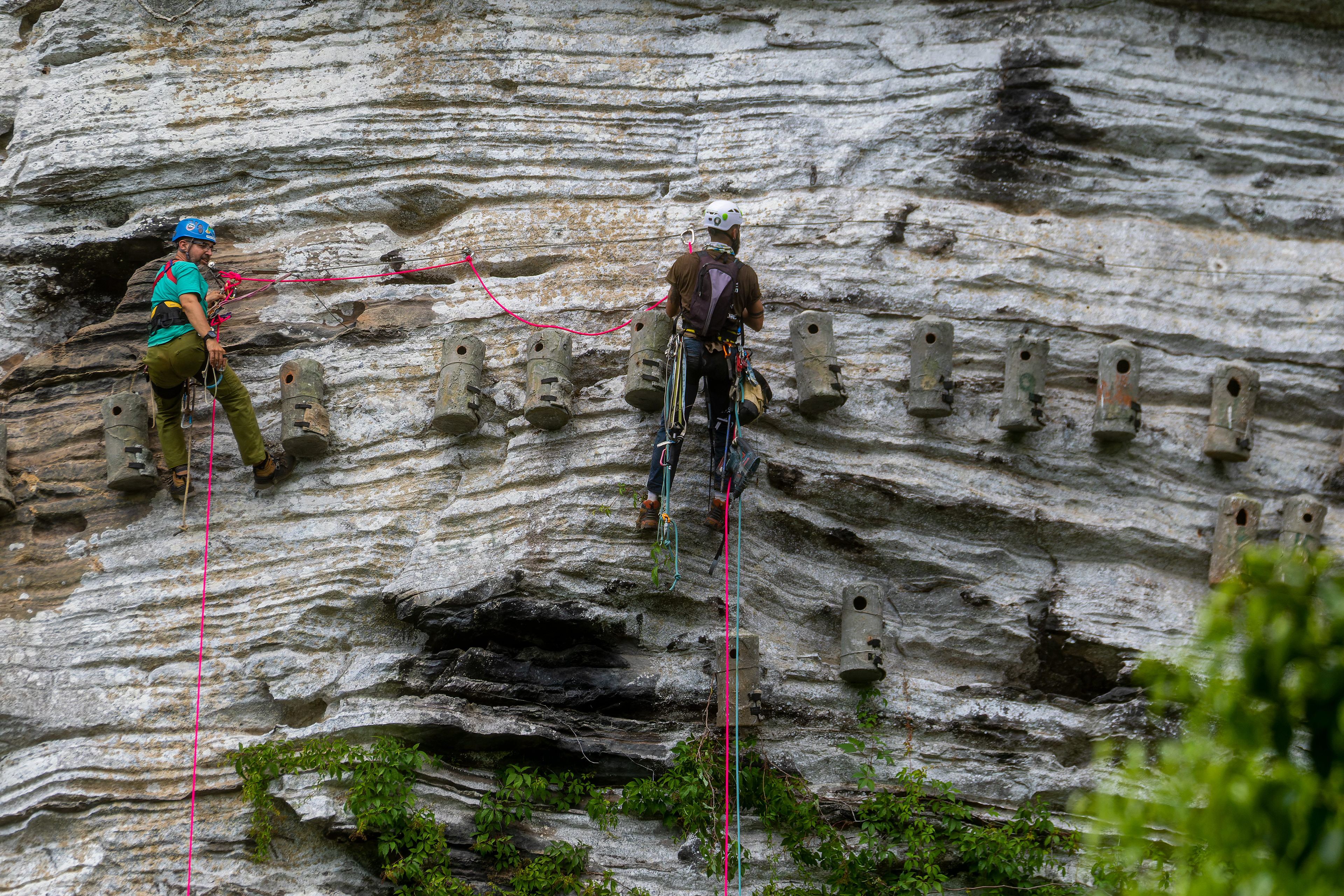
Rope-access monitoring of artificial nest boxes used by cliff-nesting Cuban Amazons
Selected publications and outputs
[Publication 1 — full citation, year and DOI or link]
[Publication 2 — full citation, year and DOI or link]
[Publication 3 — full citation, year and DOI or link]
[Technical report, conservation plan or dataset — title, year and link]
Partners and support
Since 2005, the program has received sustained support from Loro Parque Fundación. Its implementation has also relied on collaboration with protected-area staff, local residents, volunteers and other Cuban conservation partners.